


- 16 June 2026
- By: Edge Admin
- in: Information

As global temperatures continue to rise, the demand for cooling has transformed from a seasonal luxury into a structural necessity. However, our traditional method of staying cool—refrigerated air conditioning (AC)—presents a deeply ironic environmental paradox: the more we use it to escape the heat, the more greenhouse gases we pump into the atmosphere, warming the planet even further.
For businesses and homeowners looking to break this cycle, evaporative cooling offers a radically sustainable alternative. By ditching chemical refrigerants and high-energy compressors in favour of a simple, natural process, this technology is proving that we don’t have to compromise the planet to stay comfortable.
To understand why evaporative coolers are so eco-friendly, we first have to look at the sheer energy demands of traditional refrigeration. Standard AC systems rely on a closed-loop chemical cycle that forces heavy-duty compressors to run constantly.
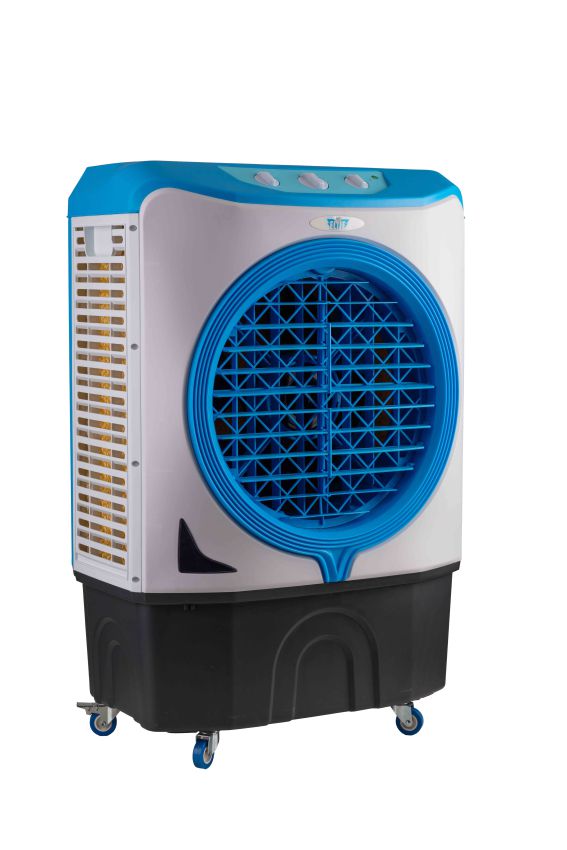
An evaporative cooler operates on an entirely different principle: adiabatic cooling (the natural absorption of heat through water evaporation). Because the cooling medium is simply water, the only mechanical components that require power are a low-wattage water pump and a ventilation fan.
According to industry data from leading UK ventilation specialists like EcoCooling, evaporative systems use up to 90% less electricity than a comparable refrigerated AC unit. On a large commercial scale, adopting this technology allows facilities to dramatically slash their scope 2 emissions (indirect emissions from purchased electricity).
During intense summer heatwaves, the sudden surge in electricity demand from millions of air conditioning units spinning to life puts immense stress on the UK’s National Grid. This peak demand often forces grid operators to fire up older, carbon-heavy fossil fuel power stations to cope with the load.
Because evaporative coolers draw a fraction of the wattage, their widespread adoption actively flattens these volatile energy spikes, supporting a smoother, cleaner transition to renewable grid power.
A common critique of evaporative coolers is their water consumption. However, when evaluated through a holistic sustainability lens, the math tells a surprising story:
The Electricity-Water Connection: Generating electricity at a traditional power station requires massive amounts of water for cooling purposes. Because an evaporative cooler saves up to 90% on electricity compared to traditional AC, the net water saved at the power station often completely offsets—or even exceeds—the water consumed by the unit itself.
Sustainability isn’t just about the outdoor ecosystem; it’s also about creating a healthy, non-toxic environment inside our buildings.
Traditional air conditioning relies on recirculating the same stale, dry indoor air over and over, trapped inside a sealed building envelope. This can lead to “Sick Building Syndrome,” where airborne pollutants, dust, and viruses continuously loop through the vents.
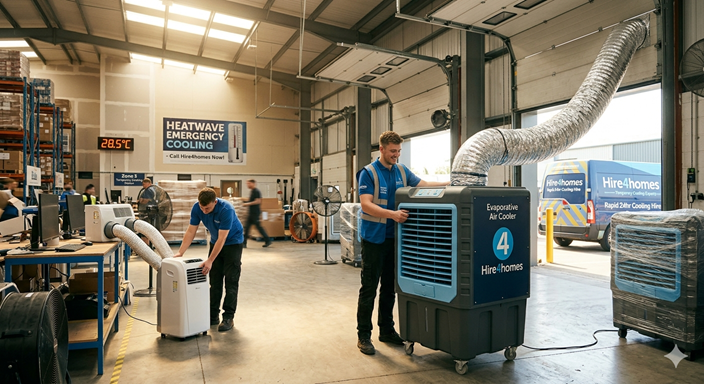
Evaporative systems act as a constant fresh air ventilation system. They draw 100% fresh outdoor air through wet filters—which naturally trap dust, pollen, and particles—before supplying it indoors. Simultaneously, old air is pushed out through open doors or windows, ensuring a complete air change every few minutes.
[Check Availability & Book Your Evaporative Cooler]
While highly humid environments can limit their effectiveness in residential settings, evaporative cooling has become a gold standard for specific high-impact green projects in the UK and Europe:
Data Centres: Server facilities generate astronomical amounts of heat. Using direct fresh air and evaporative cooling allows data infrastructure to maintain net-zero goals while protecting critical hardware.
Massive Industrial Spaces: Warehouses, manufacturing plants, and printing presses can be cooled effectively without the prohibitive energy costs that would otherwise make climate control impossible.
Commercial Agriculture: Glasshouses and livestock buildings use these systems to maintain natural moisture levels alongside cooling, directly mimicking natural atmospheric changes.
True sustainability requires us to rethink our engineered solutions and look at how nature solves problems. Evaporative cooling leverages the simple, elegant physics of water phase changes to deliver powerful cooling with a fraction of the environmental toll. For forward-thinking operations looking to achieve net-zero targets, turning off the compressor and turning on the power of evaporation is an undeniable win for the planet.
[Check Availability & Book Your Evaporative Cooler]

We specialise in hiring modern, reliable equipment delivered straight to your door, by our people, in our vehicles.