


- 16 June 2026
- By: Edge Admin
- in: Information

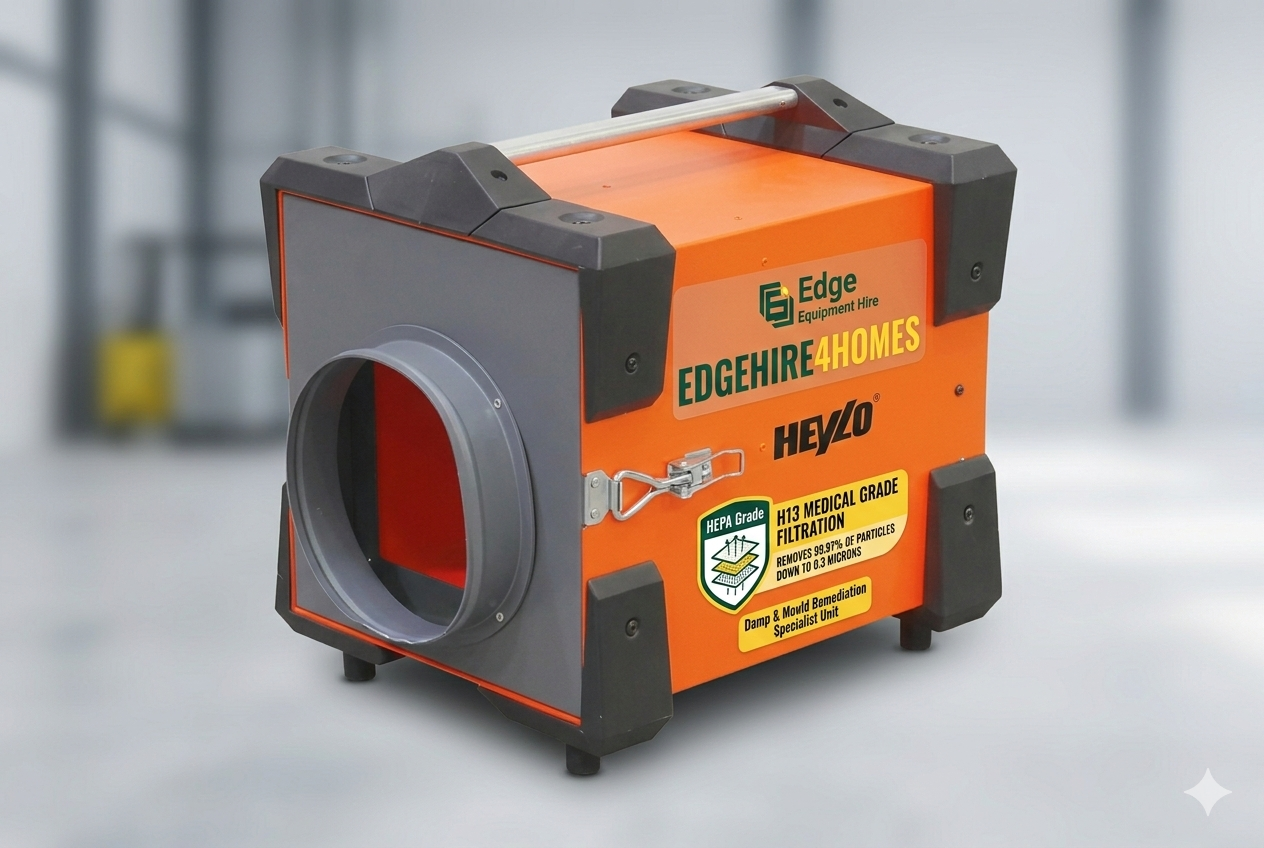
When water enters a home, it’s rarely just “clean” water. It picks up dust, allergens, and bacteria. Our HEPA-integrated equipment doesn’t just move air; it scrubs it.
Installing an Edgehire4homes HEPA air scrubber alongside your drying equipment is the difference between a dry house and a safe house.
While dehumidifiers remove moisture, they also create airflow that can disturb microscopic contaminants. A HEPA unit acts as a high-performance vacuum for your air, providing three critical benefits:
Why we use HEPA in your home:
Microscopic Capture: Captures 99.97% of particles down to 0.3 microns.
Mould Prevention: Stops dormant spores from spreading to dry rooms during the evaporation process.
Odour Elimination: Advanced filters remove the “damp smell” that lingers after leaks.
We provide every Edgehire4homes customer with a certified, clean unit. Here is how we maintain that standard:
| Feature | Our Standard | Your Benefit |
| Filter Stage 1 | G4 Pre-Filter | Captures large dust/debris, keeping airflow high. |
| Filter Stage 2 | Activated Carbon | Neutralizes flood odours and VOCs. |
| Filter Stage 3 | HEPA H13 | Medical-grade filtration for total peace of mind. |
| Sanitization | Antimicrobial Wipe-down | Every unit is disinfected before it reaches your door. |
The first line of defence is a high-capacity pleated filter. Its job is to capture the “heavy hitters” before they can clog the more expensive internal filters.
What it captures: Large dust bunnies, pet hair, carpet fibres, and large debris.
Why it’s vital: If you didn’t have a G4 filter, the HEPA filter would clog in hours rather than months. It keeps the airflow (CFM) high so the room dries faster.
Flood water often carries a distinct, unpleasant “musty” or “earthy” smell. This stage doesn’t use a mesh; it uses a bed of porous carbon.
What it captures: Volatile Organic Compounds (VOCs), smoke, and the gases responsible for flood odours.
Why it’s vital: HEPA filters are great for particles, but they can’t stop smells. The carbon layer ensures the home smells fresh as well as looks dry.
This is the final and most important stage. “H13” refers to the medical-grade classification, which is a step above standard domestic HEPA filters.
What it captures: 99.97% of particles down to 0.3 microns. This includes mould spores, bacteria, and fine silica dust from drying plasterboard.
Why it’s vital: As Edgehire4homes units dry a room, the moving air can kick up dormant mould spores. This filter “scrubs” those spores out of the air, preventing them from spreading to the rest of the house.

We specialise in hiring modern, reliable equipment delivered straight to your door, by our people, in our vehicles.