


- 16 June 2026
- By: Edge Admin
- in: Information

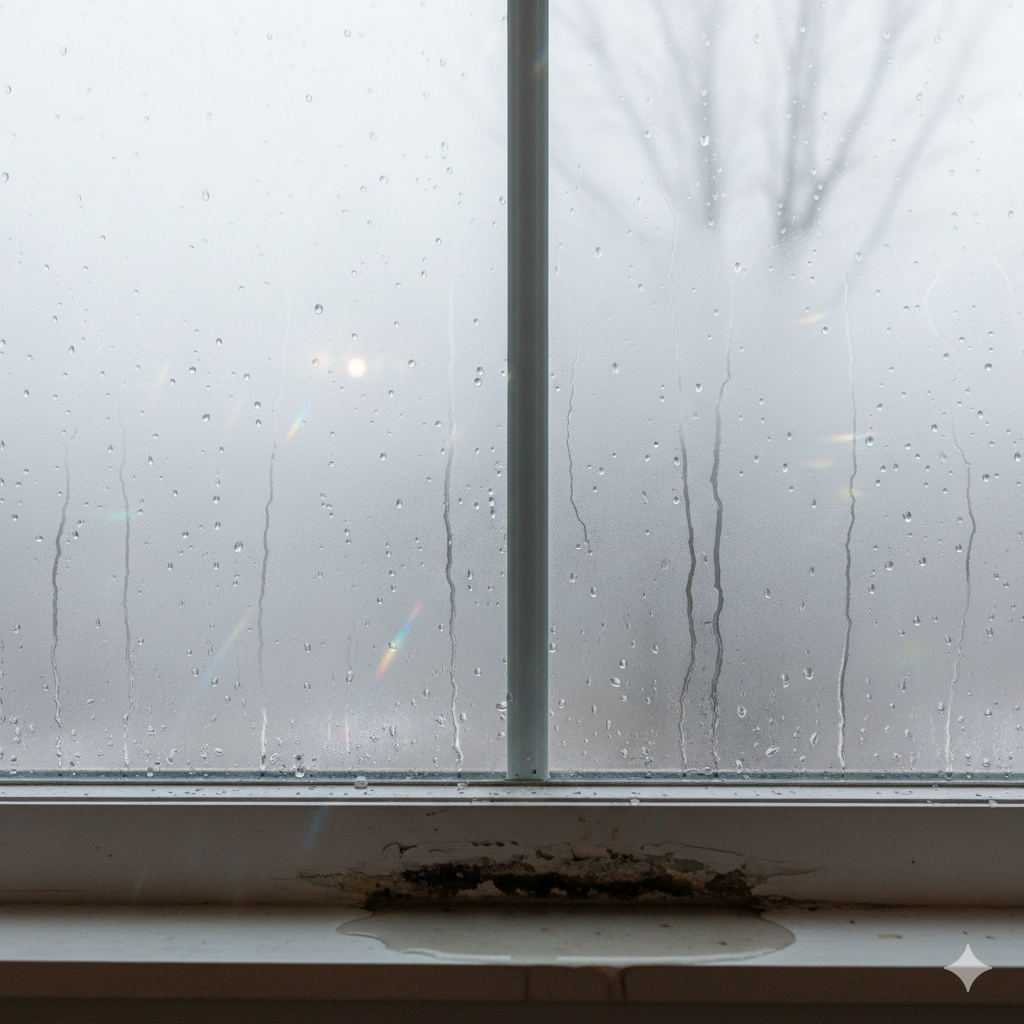
Dampness in a property is rarely just a “stain on the wall.” It is a biological hazard that compromises the air you breathe and the integrity of your home. Understanding the difference between Surface Condensation and Structural Damp is the first step toward a healthy home.
Most damp issues start with Condensation. This occurs when warm, moisture-laden air hits a cold surface (like a window or an external wall) and turns back into liquid water.
Condensation: High humidity caused by bathing, cooking, or breathing meeting cold spots.
Penetrating Damp: Water entering from the outside (leaking gutters, cracked render).
Rising Damp: Groundwater being “wicked” up through masonry due to a failed Damp Proof Course (DPC).
When you discover damp, you are in an emergency race against Mould Growth. Mould spores can begin to colonize a surface in as little as 24 to 48 hours.
Mould thrives in humidity above 60%. Your first remedial action is to drop the Relative Humidity (RH) of the room to below 50%. This puts the mould into a “dormant” state, stopping the spread. Utilisation of a dehumidifier is a must
Wiping mould off a wall releases millions of spores into the air. Before cleaning, you must deploy an H13 HEPA Air Scrubber. This creates “Clean Air Zones” by stripping 99.97% of spores from the environment, protecting your lungs.
Check for “cold spots” behind furniture. Simply moving a wardrobe 50mm away from an external wall can often stop localized condensation by allowing air to circulate.
Removal isn’t just about bleach; it’s about Moisture Extraction. If the moisture has traveled deep into the plaster or sub-floor, you are dealing with a Scenario B event.
Deep Extraction: We use industrial Scenario B Adsorption Dehumidifiers to pull moisture out of the building’s “bones”—brickwork, timber joists, and concrete.
Mould Eradication: Once the air is scrubbed and the structure is dry, we recommend professional-grade antimicrobial treatments to ensure the roots (hyphae) of the mould are destroyed.
Stopping damp from returning requires a balance of Heat, Insulation, and Ventilation.
Controlled Ventilation: Ensure bathroom and kitchen fans are high-extraction models (not just “silent” ones that don’t move enough air).
Constant Heat: Keeping a consistent, low-level heat is more effective at preventing condensation than “bursts” of high heat, which cause rapid evaporation and subsequent condensation.
The Monitoring Phase: Use a simple hygrometer to monitor your home’s “vitals.” If the screen shows above 55%, it’s time to switch on your professional dehumidifier for a few hours.

We specialise in hiring modern, reliable equipment delivered straight to your door, by our people, in our vehicles.