


- 16 June 2026
- By: Edge Admin
- in: Information

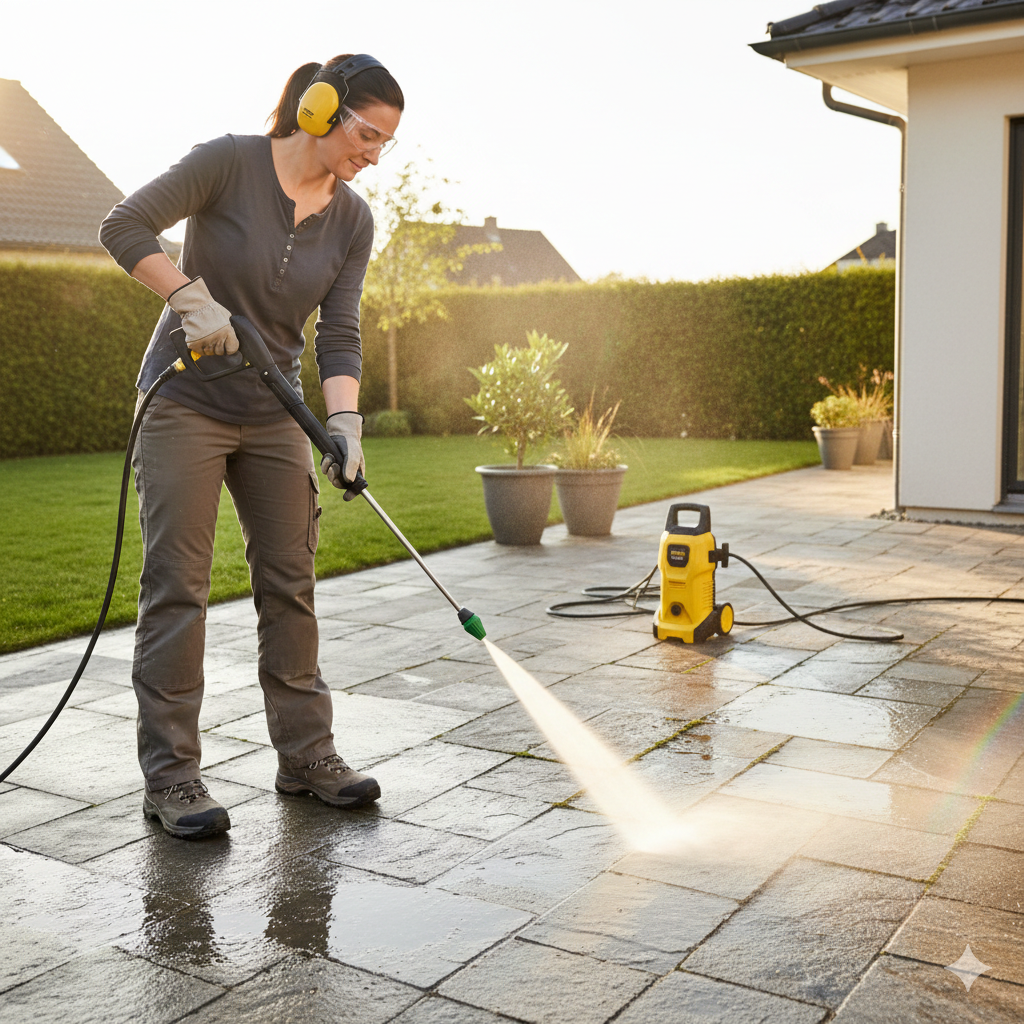
A grimy patio can detract from your outdoor oasis, but with a pressure washer, you can bring it back to life. While professional help is always recommended for extensive or delicate jobs, tackling your patio can be a rewarding DIY project if done correctly. This guide will walk you through the steps to safely and effectively clean your patio with a pressure washer.
Pressure washers are powerful tools that can cause serious injury or damage if misused. Always prioritize safety:
Read the Manual: Familiarize yourself with your specific pressure washer’s instructions and safety features.
Wear PPE: Always wear safety goggles or glasses, closed-toe shoes, long pants, and hearing protection.
Check Hoses and Connections: Ensure all hoses are securely connected and free of leaks.
Keep Distance: Maintain a safe distance from the nozzle and other people/pets.
Never Point at People or Animals: This is extremely dangerous.
Test a Small Area: Always start in an inconspicuous spot to test your technique and pressure setting.
Pressure Washer: Electric (lighter duty) or Gas (heavier duty).
Nozzle Set: Typically includes 0°, 15°, 25°, and 40° nozzles, and sometimes a soap/detergent nozzle.
Patio Cleaner/Degreaser: Choose an appropriate cleaning solution for your patio material.
Stiff-Bristle Brush: For scrubbing stubborn stains.
Garden Hose: For rinsing.
Safety Goggles/Glasses, Hearing Protection, Closed-Toe Shoes.
Gloves.
Clear the Patio: Remove all furniture, potted plants, grills, toys, and anything else from the patio surface.
Sweep Thoroughly: Use a broom to sweep away loose dirt, leaves, and debris. This prevents clogging your pressure washer and allows the cleaning solution to work directly on the grime.
Protect Nearby Plants: If using cleaning solutions, pre-wet any nearby plants with your garden hose. This helps dilute any overspray that might reach them. You can also cover delicate plants with plastic sheeting.
Seal Off: Close all windows and doors leading to your house to prevent water from entering.
This is crucial to avoid damaging your patio.
Start with a Wider Angle: Begin with a 25° or 40° (white or green) nozzle. These provide a wider spray pattern and lower pressure, reducing the risk of damage. The 0° (red) nozzle is extremely powerful and can etch concrete or damage softer surfaces – avoid it for general patio cleaning.
Match Pressure to Material:
Concrete & Pavers: Can handle higher pressure (15° nozzle, 2000-3000 PSI).
Stone (natural, softer): Use moderate pressure (25° nozzle, 1500-2000 PSI).
Wood/Decking: Requires low pressure (40° nozzle, 500-1000 PSI) and soft washing techniques to avoid gouging.
Always test a small, hidden area first!
For best results, especially with stubborn stains like mold, mildew, or oil, use a pressure washer-compatible cleaning solution.
Mix Solution: Follow the manufacturer’s instructions for diluting the cleaning solution.
Load Detergent: Most pressure washers have a siphoning tube or a dedicated detergent tank. Attach the soap/detergent nozzle (often black) to apply the solution at low pressure.
Apply Evenly: Spray the solution evenly over the entire patio surface.
Let it Dwell: Allow the solution to sit for 5-10 minutes (check product instructions), letting it break down the grime. Do not let it dry on the surface.
Attach Cleaning Nozzle: Switch to your chosen cleaning nozzle (e.g., 25° or 40°).
Maintain Distance: Hold the nozzle 6-12 inches from the surface.
Use Consistent Strokes: Start at one end of the patio and work your way across in overlapping, even strokes. Work in sections. Avoid stopping in the middle of a stroke, as this can leave noticeable lines.
Rinse Thoroughly: Once you’ve cleaned a section, rinse it completely to remove all cleaning solution residue and dislodged dirt. Work downwards if there’s a slope.
For very tough stains, apply more cleaning solution directly, let it dwell, and gently scrub with your stiff-bristle brush before re-pressuring washing.
You might carefully try a slightly narrower nozzle (e.g., 15°) on very tough concrete stains, but increase your distance from the surface and move quickly.
Rinse Again: Give the entire patio a final, thorough rinse with plain water to ensure all soap and dirt are gone.
Allow to Dry: Let the patio air dry completely before replacing furniture.
Work in Sections: This helps you manage the process and prevents cleaning solutions from drying out.
Overlap Strokes: Ensure you cover every inch of the patio for an even clean.
Consider a Surface Cleaner Attachment: These accessories connect to your pressure washer and cover a larger area quickly and evenly, reducing streaks.
Don’t Rush: Take your time to achieve the best results and avoid damage.
With these steps, you can confidently clean your patio with a pressure washer and enjoy a beautiful, refreshed outdoor space. Remember, if you’re ever unsure or have a particularly challenging job, Edgehire4homes is here to help with professional pressure washing services!

We specialise in hiring modern, reliable equipment delivered straight to your door, by our people, in our vehicles.