


- 16 June 2026
- By: Edge Admin
- in: Information

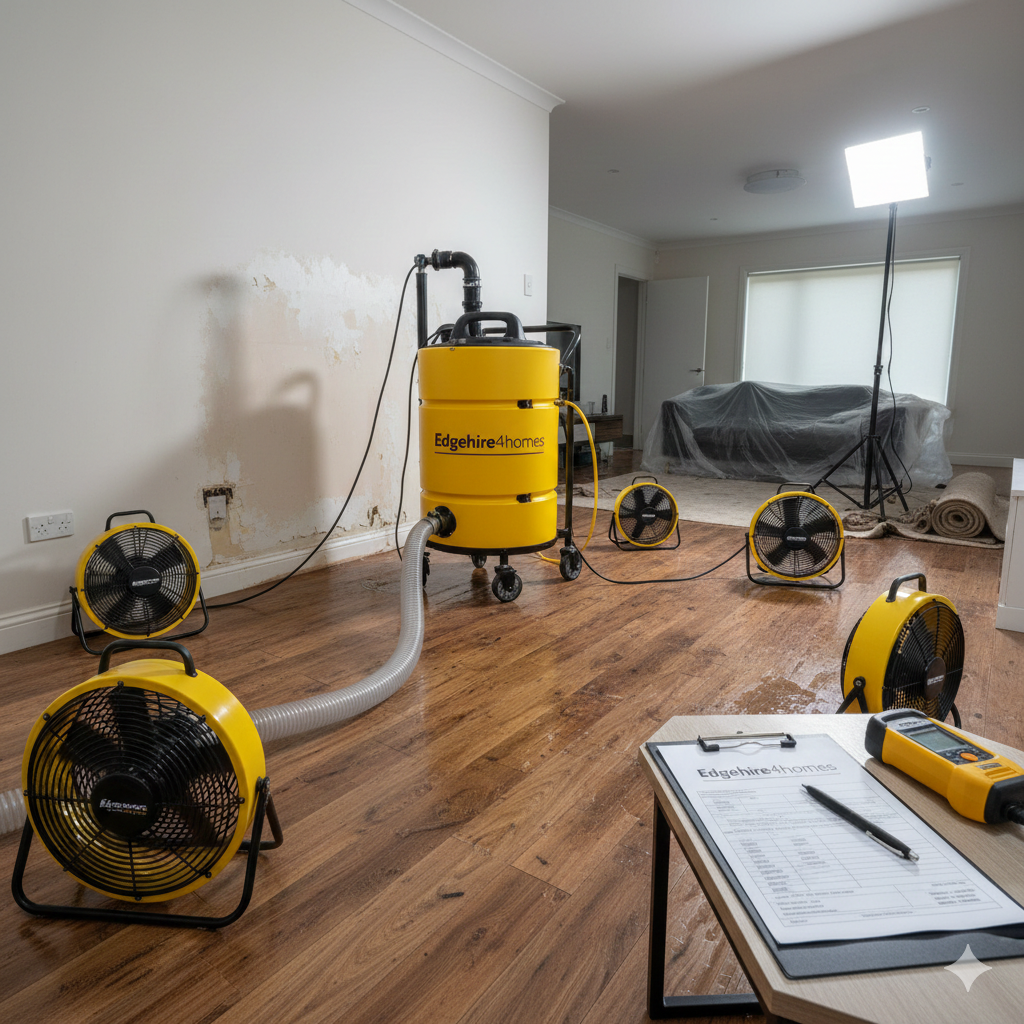
Whether it’s a slow drip from an upstairs shower or a major ground-floor flood, water damage is a race against time. For customers of Edgehire4homes, understanding these costs is vital for insurance claims and deciding whether to “DIY” the drying process with professional hire equipment or call in a full-scale restoration team.
Below is a detailed breakdown of current UK restoration and repair costs for 2026.
This usually involves “Category 1” (clean) water from a burst pipe or overflowing sink that is caught quickly.
Average Cost: £500 – £1,500
What’s Involved: Water extraction from carpets, localized drying, and minor cosmetic touch-ups.
Key Cost Factors:
Time on Site: If the water sat for less than 24 hours, costs stay low.
Flooring Type: Drying out a carpet is significantly cheaper (£15–£30/m²) than saving a buckled hardwood floor (£30–£45/m²).
Equipment Hire: Many homeowners save over £1,000 here by hiring industrial dehumidifiers and air movers themselves rather than paying a contractor’s markup.
Often caused by upstairs bathroom leaks, this requires both structural and electrical safety checks.
Average Cost: £1,400 – £1,700
What’s Involved: Cutting out sodden plasterboard, treating joists for damp, replacing light fittings, and re-plastering.
Key Cost Factors:
Patch vs. Replace: A small patch repair might only cost £150 – £200, but if the structural integrity of the boards is gone, a full replacement is safer.
Electrical Safety: If water travelled through a light fixture, an electrician’s inspection is mandatory (approx. £150 – £250 per day).
The “Stain Bleed”: Special stain-blocking primers must be used before painting, or the yellow water ring will reappear within weeks.
Basements are high-risk because water has nowhere to go. It requires heavy-duty pumping before drying can even begin.
Average Cost: £3,000 – £10,000+
What’s Involved: Submersible pumping, bulk muck-out, extended industrial drying (often 7–14 days), and anti-microbial sanitization.
Key Cost Factors:
Water Depth: Pumping out 2 inches of water is a different job than 4 feet which can be done with wet vac.
Tanking/Waterproofing: If the flood was caused by “seepage” through walls, you may need a new damp-proof course or basement tanking (approx. £120/m²).
Hidden Moisture: In basements, water gets trapped behind wall linings. Professional moisture meters are essential to ensure the space is actually dry before you refit it.
This is a high-health-risk category. Everything the water touches is potentially toxic.
Average Cost: £5,000 – £15,000+
What’s Involved: Specialist hazardous waste removal, deep chemical sanitization, and stripping all porous materials (drywall, insulation, carpets).
Key Cost Factors:
Disposal Fees: Contaminated waste cannot go in a standard skip; it requires “controlled waste” disposal which carries a premium.
PPE & Specialist Labour: Technicians must wear full respiratory and skin protection.
Testing: Professional “swab testing” is often required post-clean to prove the area is safe for human habitation again.
| Factor | Impact on Price |
| Water Category | Clean water is the cheapest; sewage (Black Water) can triple the cost. |
| Drying Time | Every day your property remains damp, the risk of Mould Remediation (adding £500–£1,500) increases. |
| Insurance Excess | Check if your “Escape of Water” coverage includes “Trace and Access” (finding the leak). |
| DIY vs. Pro | Hiring equipment from Edgehire4homes can reduce “Restoration” fees by 60%, but professional trades are still needed for structural/electrical repairs. |

We specialise in hiring modern, reliable equipment delivered straight to your door, by our people, in our vehicles.